
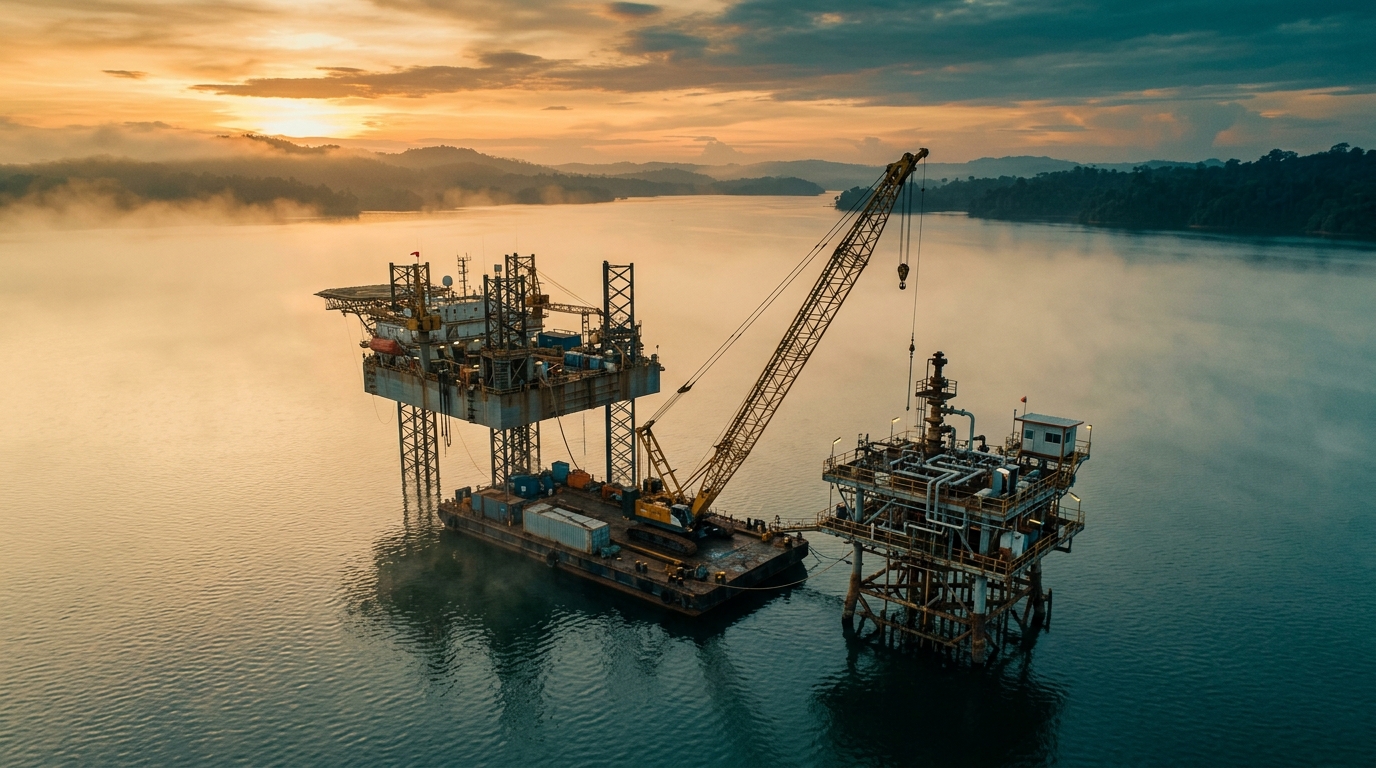
Lake Maracaibo is the most distinctive offshore operating environment in the Western Hemisphere: shallow, brackish, crowded with a century of oil infrastructure — and unforgiving of contractors who treat it like land work with extra steps. LATICON has built and maintained on its waters since 2004. Two decades of campaigns have taught us exactly where lake projects are won and lost, and that experience is what this article distills for the operators and engineering firms now planning a return to its fields.
An environment with its own rules
On paper, the lake looks forgiving: sheltered waters, modest depths, short transit distances. In practice, three factors dominate every work plan. The first is density — thousands of platforms, flowlines and cables, many of them aging, packed into producing blocks where a dropped object or a dragged anchor has immediate consequences. The second is live production: almost nothing on the lake is an isolated construction site, which makes simultaneous-operations (SIMOPS) coordination with the operator a permanent discipline rather than a meeting. The third is corrosion. The lake's brackish chemistry attacks steel with an appetite that surprises engineers arriving from other basins, and it shapes everything from coating specifications to inspection intervals.
The marine spread: what the work actually requires
Lake campaigns are built around shallow-draft marine assets, and the composition of the spread decides the schedule:
- Crane and service barges — the workhorses. They carry the lift capacity, the welding stations and the deck space that platform rehabilitation lives on.
- Tugs and supply boats — the logistics artery moving crews, materials and fuel between shore bases and work fronts.
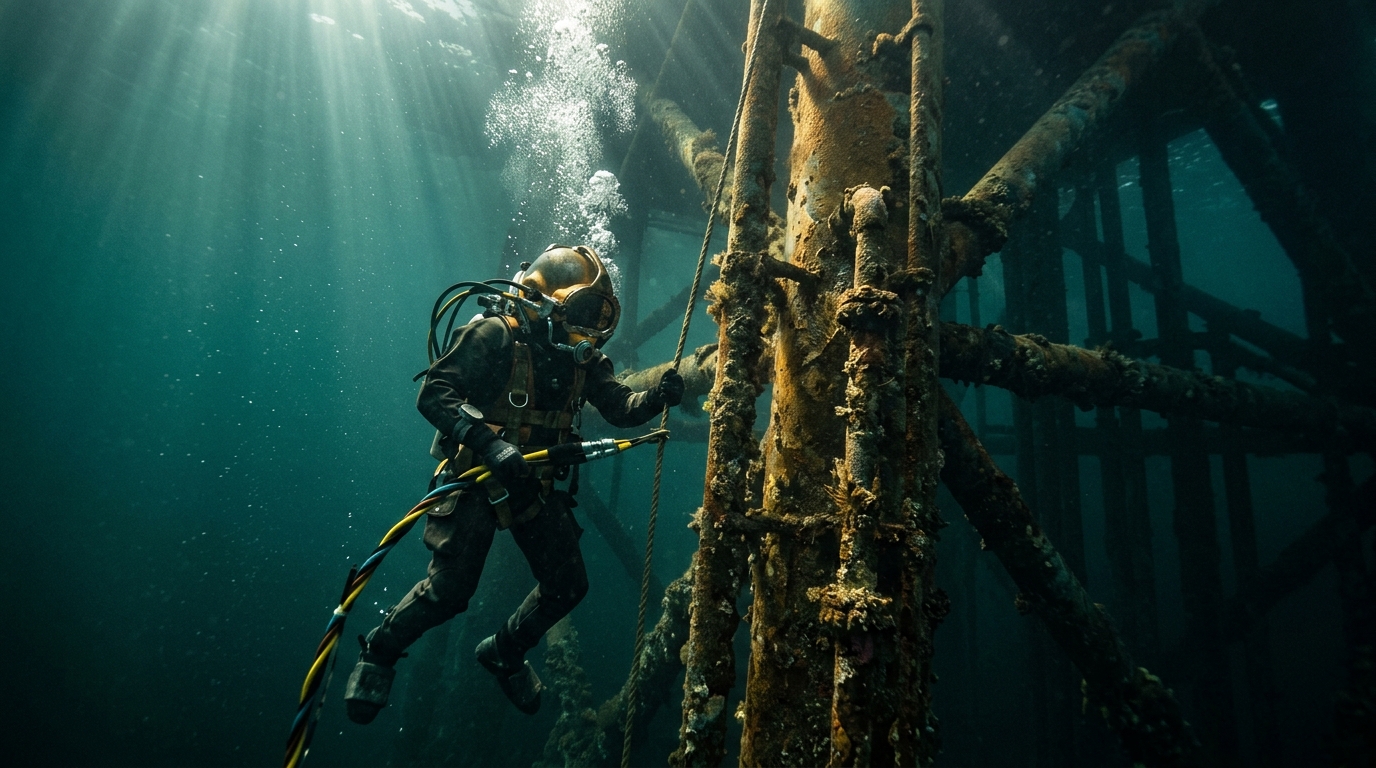
- Diving spreads — surface-supplied industrial diving for subsea inspection, riser and flowline repair, and the underwater half of every tie-in.
- Well-intervention support — cementing and coil tubing equipment staged on barges for campaigns across multiple wellheads.
Ownership matters more here than in almost any other line of work. A contractor that owns its barges mobilizes when the operator needs it; a contractor that charters mobilizes when the market permits. Our own marine equipment is the reason we can commit to campaign dates on the lake with a straight face.
The scopes defining the current cycle
Years of deferred investment left the lake with a maintenance backlog that is now the center of gravity of its new activity. The campaigns we see most often combine wellhead platform rehabilitation — structural steel replacement, deck repairs, boat landings, navigational aids — with flowline and riser work, subsea inspection ahead of restarts, and well intervention support where cementing or coil tubing units operate from our barges. Each one is modest in isolation; sequenced across dozens of structures, they become multi-year programs whose economics depend on tight marine logistics.
Safety on the water is a different discipline
Marine HSEQ extends the land program rather than copying it: lift plans reviewed against barge stability, man-overboard and abandonment drills, diving supervision with decompression management, weather criteria that respect the lake's short, sharp afternoon squalls. Our SIAHO framework has carried marine annexes for two decades — built with, and audited by, the international operators whose fields we work. That accumulated procedure is not something a newcomer can write in a mobilization month; it is the compound interest of having been on the water since 2004.
What to ask a lake contractor
If you are qualifying marine capacity for Lake Maracaibo, three questions cut through the brochures faster than any audit. Which barges do you own, and where are they moored today? Show me diving procedures and the last campaign's records. And who were your marine clients before 2020? The answers separate contractors with a lake history from contractors with a lake slide.
Lake Maracaibo campaigns: the planning shortlist
- Owned shallow-draft spread: crane barge, service barge, tugs
- SIMOPS plan agreed with the operator before mobilization
- Corrosion-informed specs: coatings, anodes, inspection intervals
- Surface-supplied diving with documented supervision
- Weather-window criteria in the schedule, not in the risk register
- Shore base within tug distance of the block
Frequently asked questions
What makes Lake Maracaibo different from open-sea work?
Shallow brackish water, dense aging infrastructure, live production around every work site and aggressive corrosion. It rewards shallow-draft spreads, disciplined SIMOPS coordination and crews who know its weather — and punishes improvisation.
What marine assets does lake work require?
Crane and service barges, tugs and supply boats, and diving spreads for the subsea scope. Owned equipment mobilizes in days; chartered equipment mobilizes when the market allows.
Which scopes dominate the current cycle?
Wellhead platform rehabilitation, flowline and riser repair, subsea inspection ahead of restarts, well intervention support and the marine logistics that stitch those campaigns together.
Planning a marine campaign on Lake Maracaibo?
Two decades on the water, owned barges and diving capacity, and SIAHO procedures shaped by international operators. Let's scope it together.