
On an offshore campaign, the risk that ends up moving the delivery date is almost never the one written into the technical specification. The scope is usually well defined: replace structural steel on a wellhead platform, repair a flowline, intervene a wellhead. What is rarely defined with the same precision is the surface the work will be executed from — when it arrives, how long it can stay, and how it behaves when the lake decides not to cooperate. That is the problem a self-elevating platform solves, and the reason it is worth understanding what one is before comparing it to any other marine asset.
A jack-up is not another barge
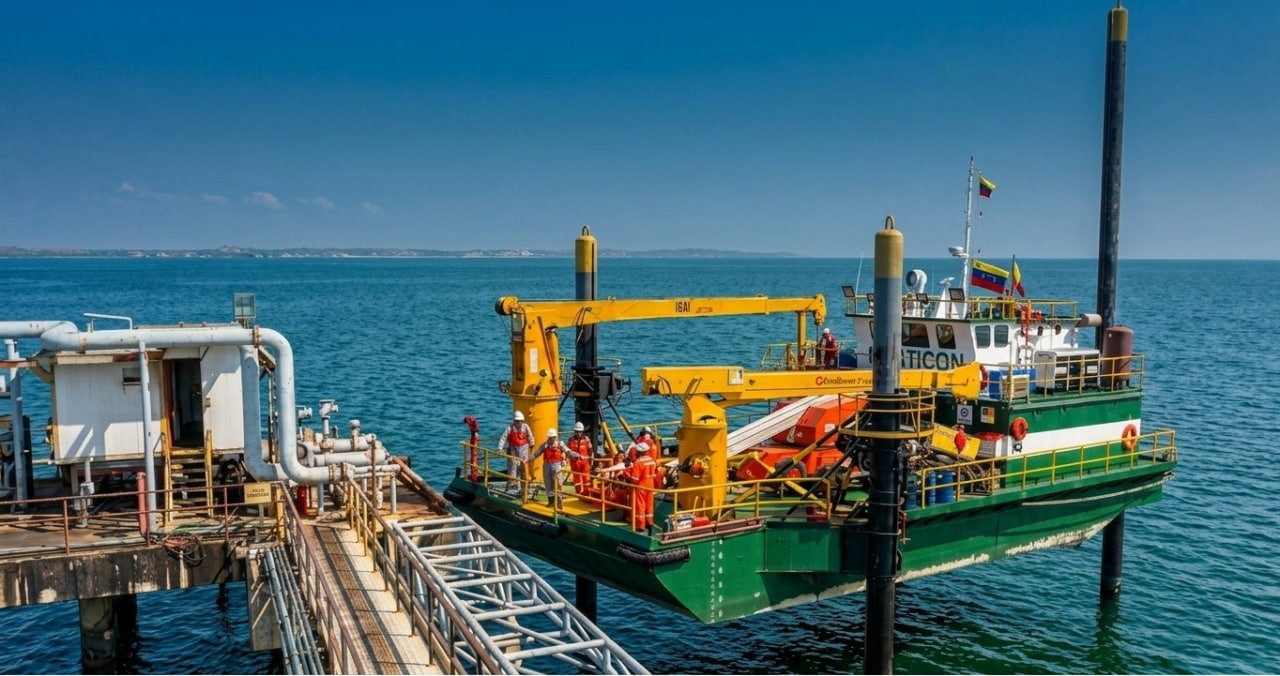
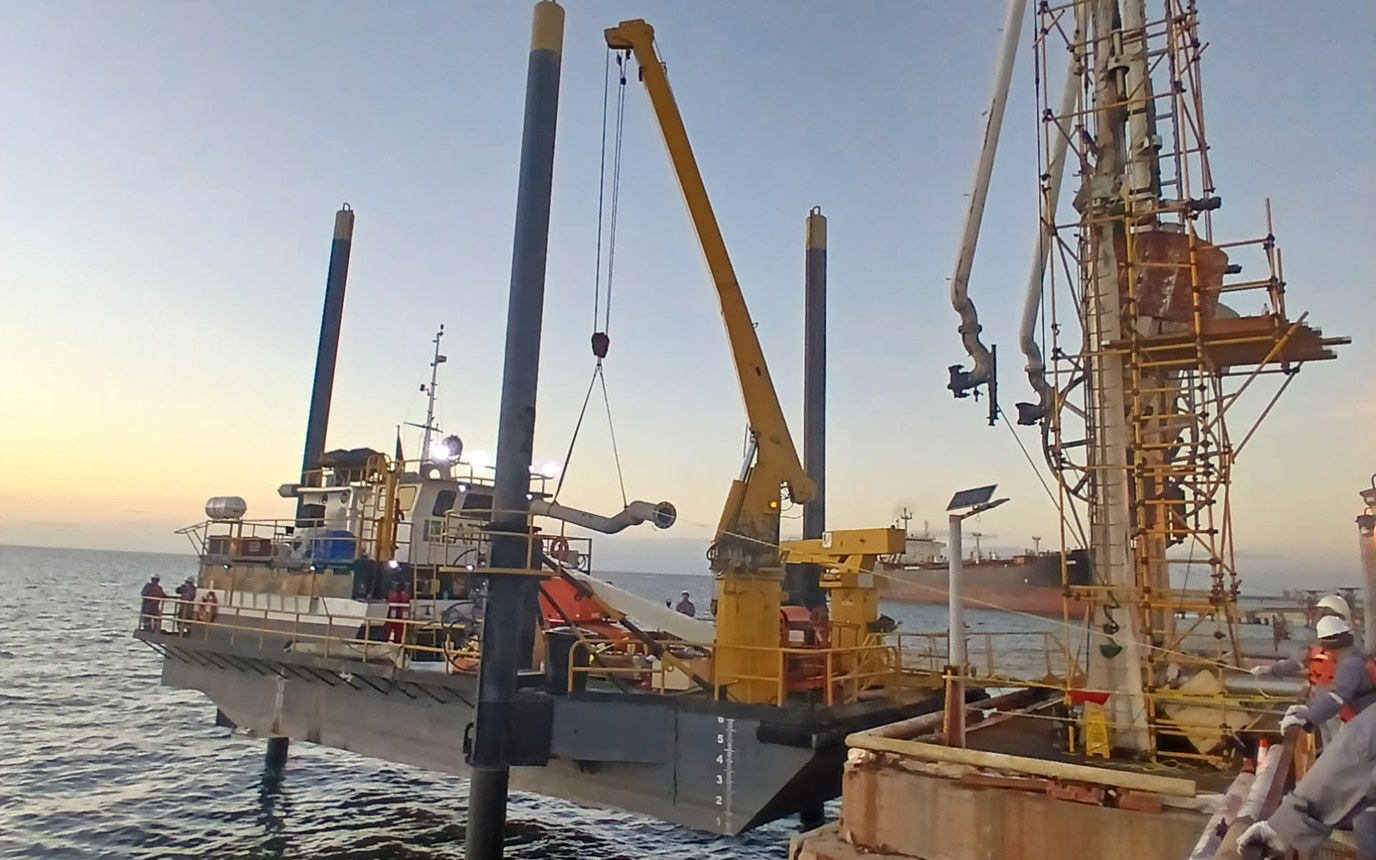
The confusion is understandable, because under tow a jack-up looks like a large barge. The difference appears on arrival at location. A jack-up lowers its retractable legs until they bear on the lakebed and, on that support, lifts its own hull clear of the water surface. At that moment it stops being a vessel and starts behaving as a fixed structure for as long as the work lasts.
That is not an incremental improvement on a barge; it is a different category of working surface. A barge floats, and anything that floats responds to wind, to the short chop this lake produces, and to the wake of any vessel passing nearby. On a deck that moves, a structural weld pass, a controlled torque or a fine lift are executed against a reference that is also moving. On a hull already jacked clear, they are not.
The three risks a jack-up takes out of the schedule
- The working window. A large share of lost time on the lake is not lost to technical difficulty but to conditions that force precision work to stand down. An elevated hull ignores states of water that, on a floating unit, mean a crew standing on deck. The consequence is not that work goes faster: it is that more of the days budgeted as workable actually are workable — and that is the variable that decides whether a multi-structure program closes inside its window.
- The mobilization. A self-elevating unit is a scarce asset. When the contractor does not own one, the campaign start date stops being a planning decision and becomes a position in someone else's queue. It is the most expensive risk precisely because it never surfaces during the tender — it surfaces after award, when there is no longer an alternative.
- The chain of command at the interface. When the working platform is supplied by one party and the scope is executed by another, a contractual boundary sits exactly where the two meet. While everything runs, that boundary is invisible. The day the unit cannot be positioned because of bottom conditions, or a lift has to be recalculated, the boundary becomes the main item on the agenda — and the operator ends up arbitrating between two suppliers instead of receiving an answer.
What changes when the asset is owned
Owning a marine asset is not a virtue in itself. What changes is concrete, and can be verified point by point.
The calendar stops being negotiated with the market. Mobilization becomes an internal decision of the same organization that signs the delivery date. It is the same logic that applies to the whole fleet and that we develop in the asset-heavy contractor — only amplified: an excavator has substitutes in the local market, a self-elevating platform does not have them with anything like the same ease.
The records sit where the evaluator asks for them. The unit is maintained and certified inside the same management system the client audits when prequalifying the contractor, not inside a third party's that has to be asked. For an HSEQ evaluator that is the difference between reviewing a file and waiting for someone to obtain it.
The crew and the unit have already worked together. Jacking and lowering are the moments of highest exposure on the entire campaign. Running them with a crew that knows the particular behaviour of that unit, rather than with whoever comes assigned to the charter, is a real difference in risk — not a difference in narrative.
The cost structure is more predictable, which is not the same as cheaper. Without an intermediation margin the direct cost is lower, but the benefit a project director values more is a different one: exposure to the spot rate on the day the unit is needed disappears. Across a multi-year program, predictability is usually worth more than the discount.
A short summary of this same advantage, with frequently asked questions, is in how do you guarantee operational continuity on offshore projects?.
The questions worth asking — of any contractor
A contractor offering self-elevating capacity should be able to answer the following without consulting anyone. If the answer takes time, that delay is information about how the relationship will behave during execution.
Verifying self-elevating capacity
- Documented ownership of the asset, not declared availability
- Operating water depth and leg penetration against the bottom conditions of the proposed site
- Deck load capacity and crane radius against the real loads of the scope
- Validity of certificates and date of the last structural inspection
- Jacking and lowering procedure, with its associated risk assessment
- Composition of the rest of the marine spread: towage, supply, support diving
- Contractual responsibility if the unit cannot be positioned at the intended location
It is worth noting that the last two questions are the ones most often skipped and the ones that most determine how a campaign ends. A jack-up does not work alone: it needs tugs, supply boats and diving capacity to survey the bottom before bearing down. And the question about contractual responsibility is uncomfortable precisely because it separates whoever is describing an asset from whoever is assuming a result.
Where this fits on Lake Maracaibo
The lake has rules of its own — shallow draft, a short chop pattern that punishes precision work, and an aggressiveness toward steel that surprises engineers arriving from other basins. On that ground, years of deferred investment left a maintenance backlog that is now the centre of gravity of its activity: wellhead platform rehabilitation, flowline and riser work, pre-restart subsea inspection and well intervention support. We set out that full picture in offshore construction and maintenance on Lake Maracaibo.
LATICON has worked these waters since 2004 within the Offshore & Marine Support unit, with owned marine equipment — self-elevating platform, service and crane barges, industrial diving support — operating under the HSEQ guidelines of the international operators we execute for. Each of those assets does a different job inside the marine spread, and none substitutes for another. What the self-elevating unit contributes is the stable surface from which the scopes that do not tolerate a moving deck are executed.
It is also why we insist on verification ahead of assertion. In a market where capacity is declared more often than it is demonstrated, the list above protects the operator — including when it is applied to us.
Frequently asked questions
What is a jack-up or self-elevating platform?
A marine unit with retractable legs that bear on the bottom and lift the hull clear of the water. For the duration of the work it stops behaving like a vessel and behaves like a fixed platform.
How does it differ from a service barge?
A barge floats and responds to wind, chop and wake. An elevated jack-up does not. The practical difference is the working window: conditions that force precision work to stand down on a floating unit can be irrelevant to a hull already jacked clear. Both are needed; they do different jobs.
Why does ownership matter rather than charter?
It changes who controls the calendar, where the maintenance and inspection records live, and whether the crew running the jacking operations already knows that unit. It also removes the contractual boundary between whoever supplies the platform and whoever executes the scope.
What should I verify before awarding a jack-up campaign?
Documented ownership, operating water depth and leg penetration against the bottom conditions of the site, deck capacity and crane radius against the real loads, validity of certificates, the jacking procedure with its risk assessment, and who carries contractual responsibility if the unit cannot be positioned.
Evaluating an offshore campaign?
We can review site conditions with your team and what marine spread the scope actually requires — before it becomes a budget line.