
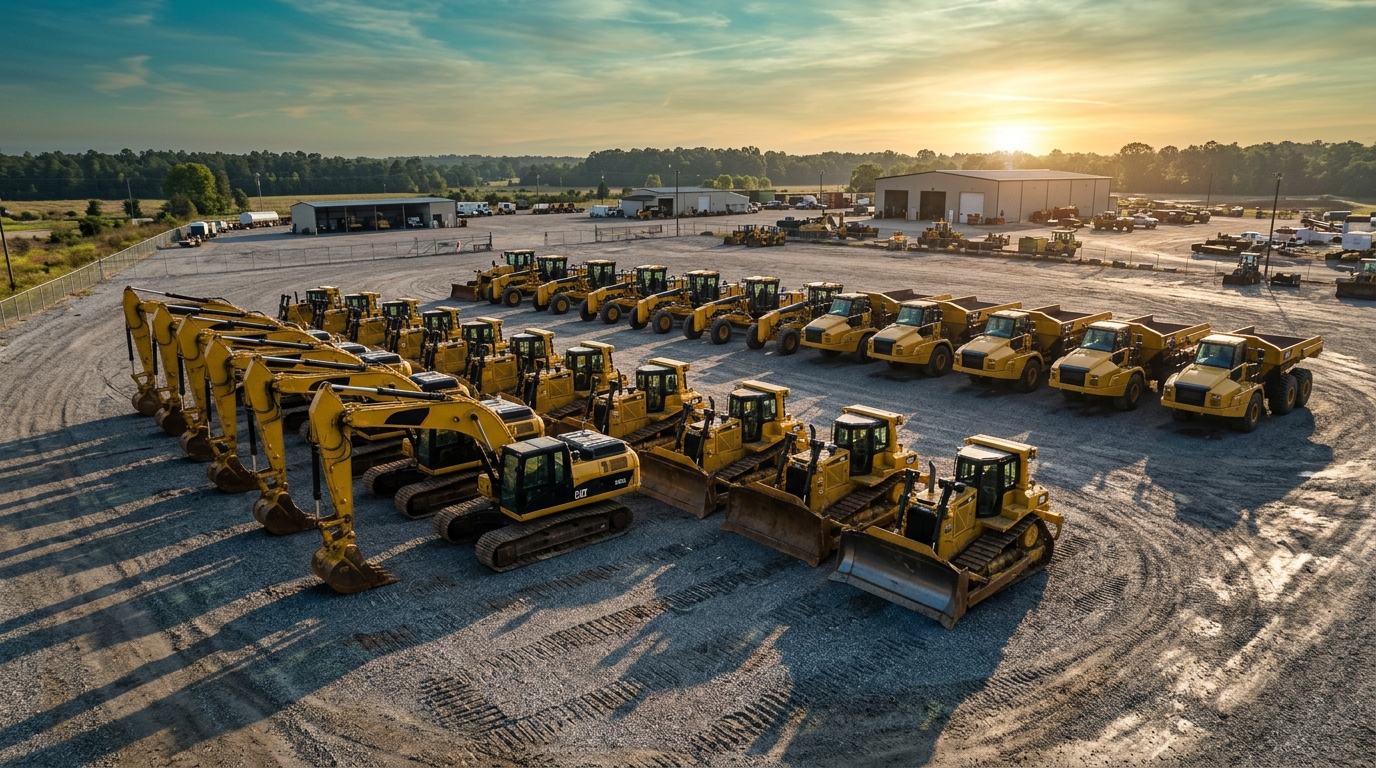
In oilfield construction, the difference between a schedule that holds and one that does not is often measured in trucks — trucks that were where they needed to be, when they needed to be there. That is the practical case for the asset-heavy contractor: an execution model built on equipment that already exists, already sits maintained in a yard, and already reports to the same organization that promises the delivery date. This article makes that case without romanticizing it, describes when rental is still the smarter option, and explains why in the Venezuelan market the balance tilts further toward ownership than in most.
The two operating models
Every construction and services company sits somewhere between two extremes. At one end, the asset-heavy model: cranes, earthmoving fleets, welding spreads, service barges and transport all owned, maintained and staffed by the contractor. At the other, the asset-light model: a small core of proprietary equipment supported by an extensive rental network that expands and contracts with each project. Both models can win; the question is which risks each one absorbs and which it passes to the client.
What ownership actually buys
- Mobilization on the contractor's calendar, not the market's. The most frequent cause of early-stage schedule slip is not technical difficulty; it is the wait for equipment. Owned machinery mobilizes in days, from a yard already inside the country and already close to the fields.
- Predictable operating condition. When the mechanic who maintains the machine reports to the same operations manager who plans the schedule, the machine tends to be available when the schedule says it will be. Rental fleets are variable by design.
- Continuity across projects. The same machines serve the same crews across successive contracts, which lets operators build the deep familiarity that produces quality and safety, rather than the initial-competence curve that repeats with every new rental.
- Certified availability. Owned equipment travels with its maintenance and inspection records — a small point until a client's HSE evaluator asks for them and needs them today.
Where rental — the smart kind — belongs
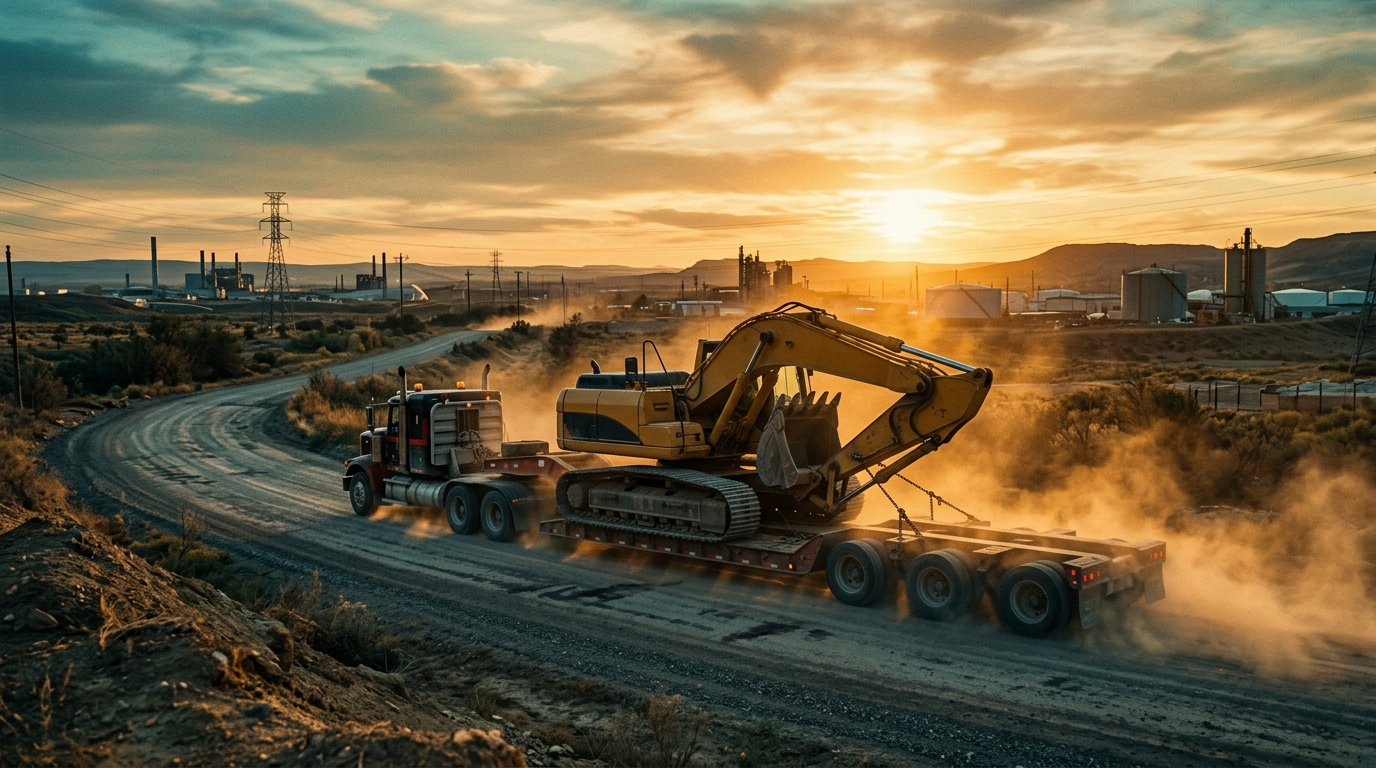
Nobody serious argues for owning every piece of equipment they will ever use. Peak demands beyond the workhorse fleet, specialty equipment used briefly, and scopes in geographies far from the owned base are all rental territory. A mature asset-heavy contractor complements its own fleet with disciplined rental — and, increasingly, offers rental itself. Renting from an operator with its own maintenance shop, certified operators and long field track record is not the same product as renting from a broker with a warehouse. In our own service portfolio, equipment rental sits alongside industrial supply precisely for the operators and engineering firms that prefer to run their own operations while relying on a partner for the assets and materials.
Why Venezuela tilts the balance further toward ownership
Two features of this market push the trade-off harder than in most. First, the local rental network is thin: the deep secondary market that operators in North America take for granted does not exist in the same depth here. Second, import lead times for new construction equipment are long — long enough that "we will have it when we mobilize" often means "we will have it a quarter into your project." Both amplify the value of what is already in country. It is one of the reasons the contractors that survived the 2014–2020 cycle and kept their fleets maintained are the ones now qualified to execute the reactivation, a point we developed in our local content guide.
What LATICON's asset base looks like
Our operating model is deliberately asset-heavy across four business units. Earthmoving and civil equipment for road, pad and pipeline right-of-way work. Welding spreads and workshop capacity for facilities and pipeline scopes. Electrical test equipment and specialty tools for medium and high voltage work. And marine assets — barges and support craft — for offshore campaigns on Lake Maracaibo. All maintained under an integrated program, all based within reach of the western and eastern fields, and all complemented by equipment rental and industrial supply lines for the scopes where clients prefer that structure. Ownership is not an ideology for us; it is what lets us commit to dates the market otherwise treats as guesses.
Evaluating a contractor's asset position
- Owned fleet inventory with serial numbers and maintenance records
- Ratio of owned to rented equipment in recent projects
- Yard location(s) versus the field of the proposed work
- In-house maintenance capability and spare-parts strategy
- Operators certified for the classes of equipment offered
- Rental and industrial supply capacity for scopes beyond execution
Frequently asked questions
What is an asset-heavy contractor?
A construction and services company whose execution rests on directly owned and maintained equipment, rather than on third-party rentals available when the contract is signed.
When does renting equipment still make sense?
Peak loads beyond the owned fleet, specialty equipment used briefly, and geographies far from the owned base. A serious asset-heavy contractor complements its fleet with disciplined rental — and often offers rental itself.
How much of the equipment should be owned?
Enough to cover the workhorse equipment of the core scopes. In Venezuela, where the rental market is thin and import lead times are long, ownership matters more than in markets where equipment can be sourced in days.
Need construction capacity — or the equipment behind it?
Owned fleet across four business units, plus equipment rental and industrial supply for the scopes where you prefer to run the operation.