
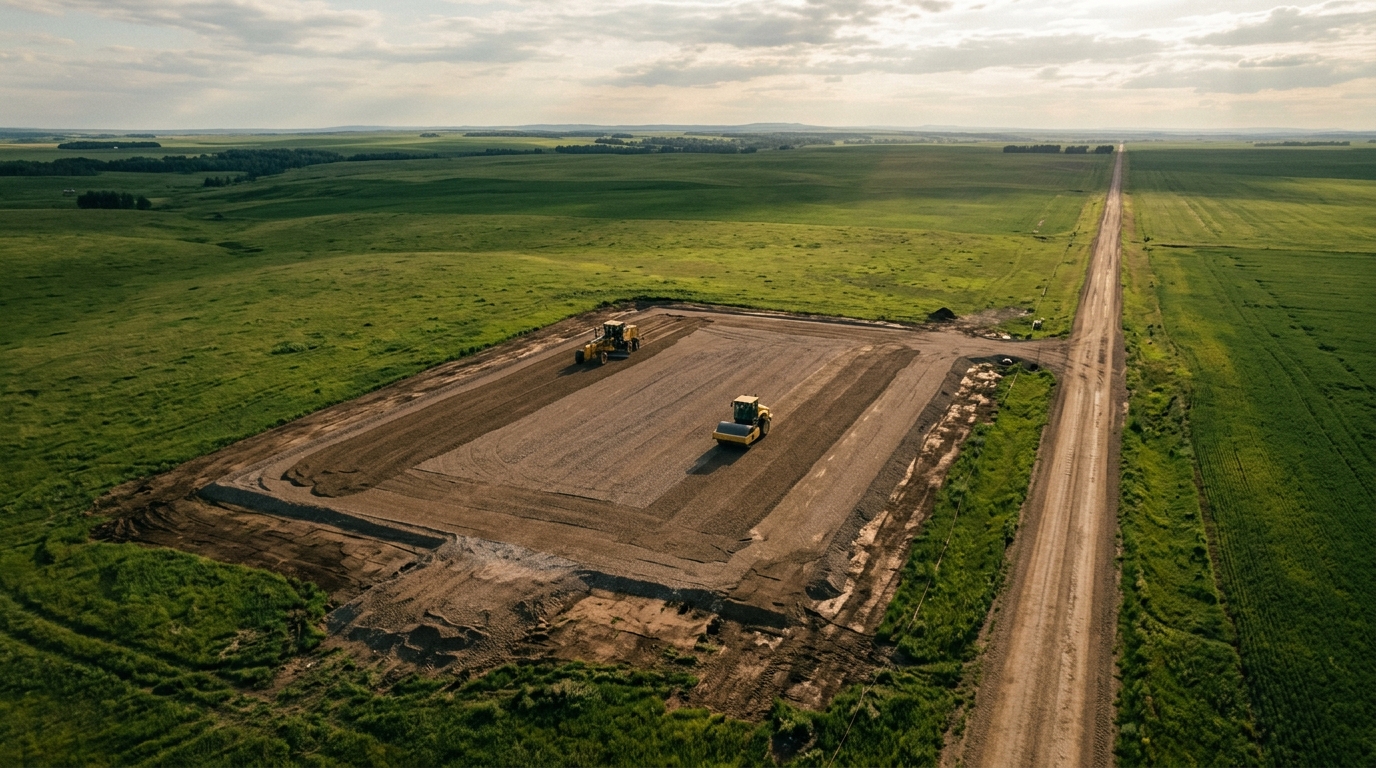
A drilling schedule is decided long before the rig arrives. By the time a rig moves to a location, the pad must hold its weight, the access road must carry every truck the campaign will bring, and the drainage must protect both from the first serious rain. When any of those three fails, the campaign pauses — and pauses on a rig with day rates that pay for the entire civil scope every few days. This article explains what disciplined wellpad and access construction looks like in Venezuelan terrain, and where the small civil decisions produce large operational effects.
Geotechnics before geometry
The first honest answer a civil contractor gives to a wellpad request is: let me see the ground. Soil investigation — even a limited program of test pits and hand borings — reveals the subgrade condition, the water table, and the presence of expansive clays or organic layers that would compromise a compacted pad. In the western llanos and the eastern plains that host most Venezuelan drilling, sub-surface variability across even a single hectare is common. The design of the pad and the road follows from that data, not from a template.
The wellpad build, in the order that matters
- Vegetation clearing and topsoil separation. Cleared to the minimum footprint, topsoil stripped and stockpiled outside the working area for eventual restoration.
- Subgrade preparation. Grading to design levels, soft-spot replacement where the investigation flagged it, and compaction verified with density tests — because a pad is only as good as the earth beneath its gravel.
- Sub-base and base layers. Selected material placed and compacted in controlled lifts, thickness sized to the load-bearing requirement of the campaign's heaviest equipment. A pad built for a workover rig will not hold a large drilling rig; a pad built once for both is much cheaper than a pad rebuilt twice.
- Surface course. Well-graded gravel finished to elevation, with a running surface that will not rut under repeated truck traffic.
- Drainage. Perimeter ditches, culvert crossings sized to actual storm return periods, and a slope that carries water off the pad and away from the road.
- Containment. Pits, berms and liners as the design and permits require, with the geometry a well-completion crew can actually use.
- Access road. The other half of the scope, no less important — width, curvature and grades that accept the drilling logistics; sub-base and surface engineered to the same standard as the pad; drainage that keeps it passable through the rainy season.
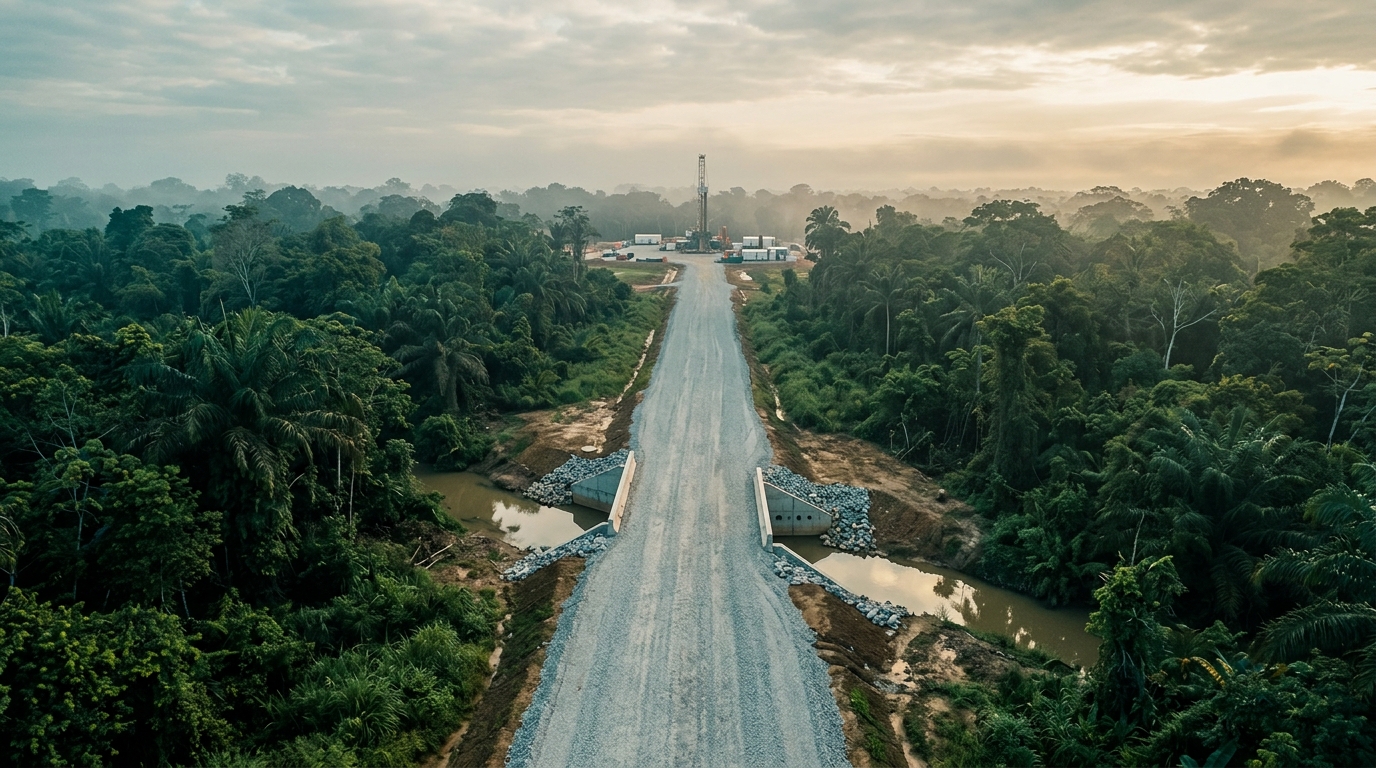
Where the small civil decisions matter
Three unglamorous choices produce most of the operational difference. First, drainage designed for the local storm pattern, not for a national average — a pad that ponds is a pad that stops work. Second, compaction actually tested, not assumed: a nuclear densimeter reading is cheaper than a rig sinking into a soft spot. Third, load capacity sized to the plan and the plan-after-that: campaigns evolve, equipment grows, and the marginal cost of a slightly stronger pad is trivial compared with rebuilding it for a heavier rig two years later. These are decisions that look like line items in an estimate; they behave like uptime once the rig is on location.
The closure that a good pad earns
When the well is producing and the drilling activity moves on, a well-planned pad recedes gracefully into its surroundings. Contained pits are closed and sealed. The disturbed area beyond the operational footprint is re-contoured. The topsoil stockpiled at the beginning of the job comes back on top. Revegetation follows on the next rainy season. The environmental scope, in short, is not a separate deliverable but the last civil act — the same discipline that governs our pipeline right-of-way closures. It is also the deliverable that regulators, communities and future auditors will actually see.
What LATICON's civil unit brings
Our civil infrastructure and environmental unit executes the full civil sequence for drilling operations: site investigation, earthworks, drainage, gravel courses, containment, access road and closure. Owned machinery — graders, dozers, excavators, rollers, tanker trucks and lowboy transports — based within reach of the western and eastern fields, so mobilization is a matter of days. And an environmental discipline that treats revegetation as a contracted deliverable, because a pad that returns to its landscape is the mark of a serious operation on both sides of the contract.
Wellpad readiness: the civil checklist
- Soil investigation completed before design freeze
- Load capacity sized to the heaviest planned equipment
- Compaction verified with density tests, not assumed
- Drainage engineered to the local storm return period
- Access road built to the same standard as the pad
- Topsoil stockpiled for restoration
- Closure and revegetation planned as part of the scope
Frequently asked questions
How long does it take to build a wellpad?
Four to eight weeks from clearing to rig-ready for a standard pad in accessible terrain with clear permits. Difficult ground and long access roads extend that meaningfully.
What load capacity does a wellpad need?
Sized backwards from the heaviest crane, tank or coiled-tubing unit the campaign will bring, with subgrade compaction and gravel thickness documented — so the pad still holds when equipment turns out heavier than planned.
What environmental measures apply?
Topsoil separation, drainage that respects the natural regime, containment berms, spill kits during construction, and — at end of life — pit closure, re-contouring and revegetation.
Planning a drilling campaign in Venezuela?
Site prep, access roads and closure under one contractor. Owned machinery near the fields, engineered pads and drainage that survives the rainy season.