
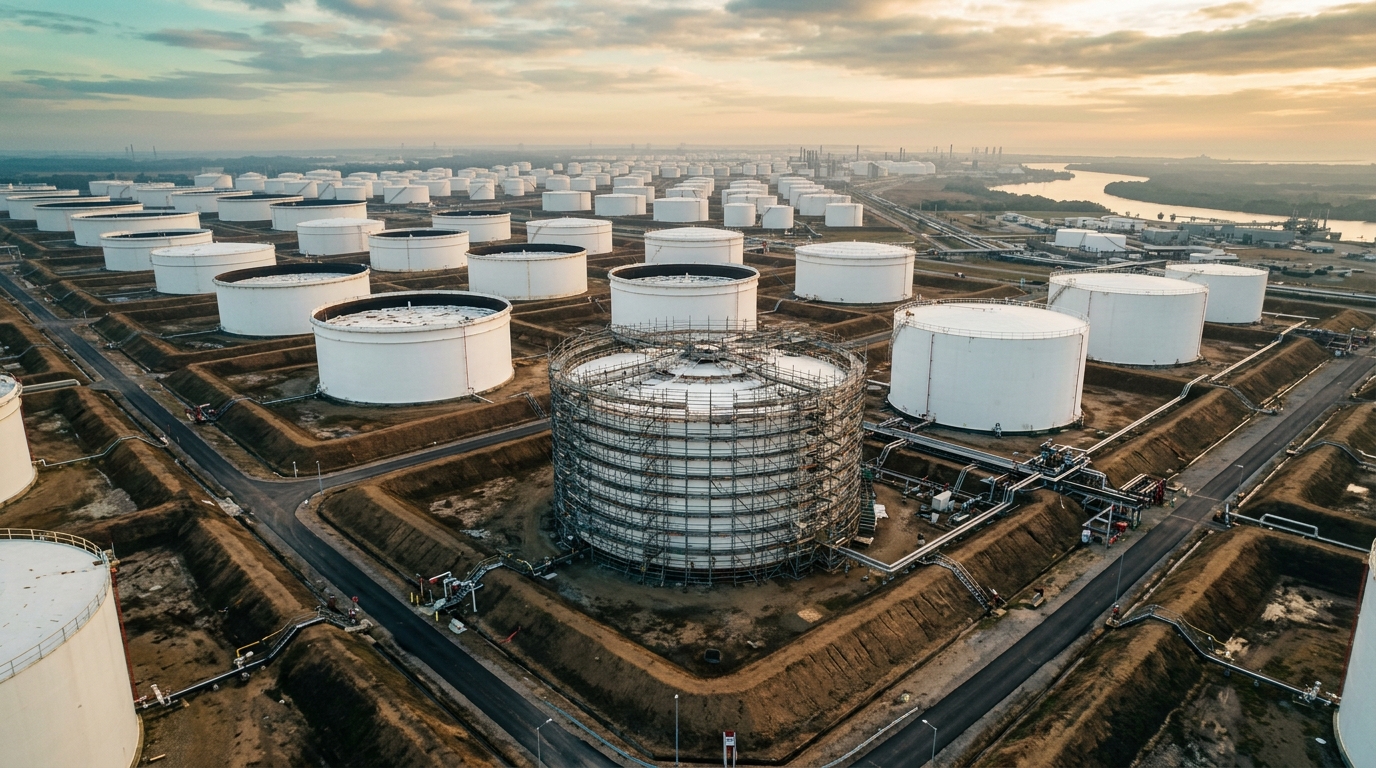
Every barrel of storage capacity in a Venezuelan facility today has a history — and a future that depends on how honestly that history is read. Mechanical integrity is the discipline that reads it: measured wall thicknesses, tracked corrosion rates, documented findings and repairs that follow the code rather than the calendar. When the discipline works, a fifty-year-old tank keeps its certificate of fitness for service. When it does not, the operator finds out at the worst possible moment. This article describes what an integrity program looks like in practice, and what asset owners should expect from the contractors executing it.
The framework: API 653 and API 570
The industry converged decades ago on two documents that frame the work. API 653 governs the in-service inspection, repair, alteration and reconstruction of above-ground storage tanks — the tanks that dominate every crude facility. API 570 plays the equivalent role for piping in operating installations. Neither is a checklist; both are a structured way of turning field measurements into decisions: how much wall is left, how fast is it going, when does the asset need intervention, and what kind. A contractor who cannot walk you through their compliance with these standards is not doing integrity work — they are doing housekeeping.
Inspection: what the data has to be
- External inspections on defined intervals covering foundation, coating condition, shell externals, appurtenances, connections and containment. This is the routine surveillance that catches accelerating problems before they become internal ones.
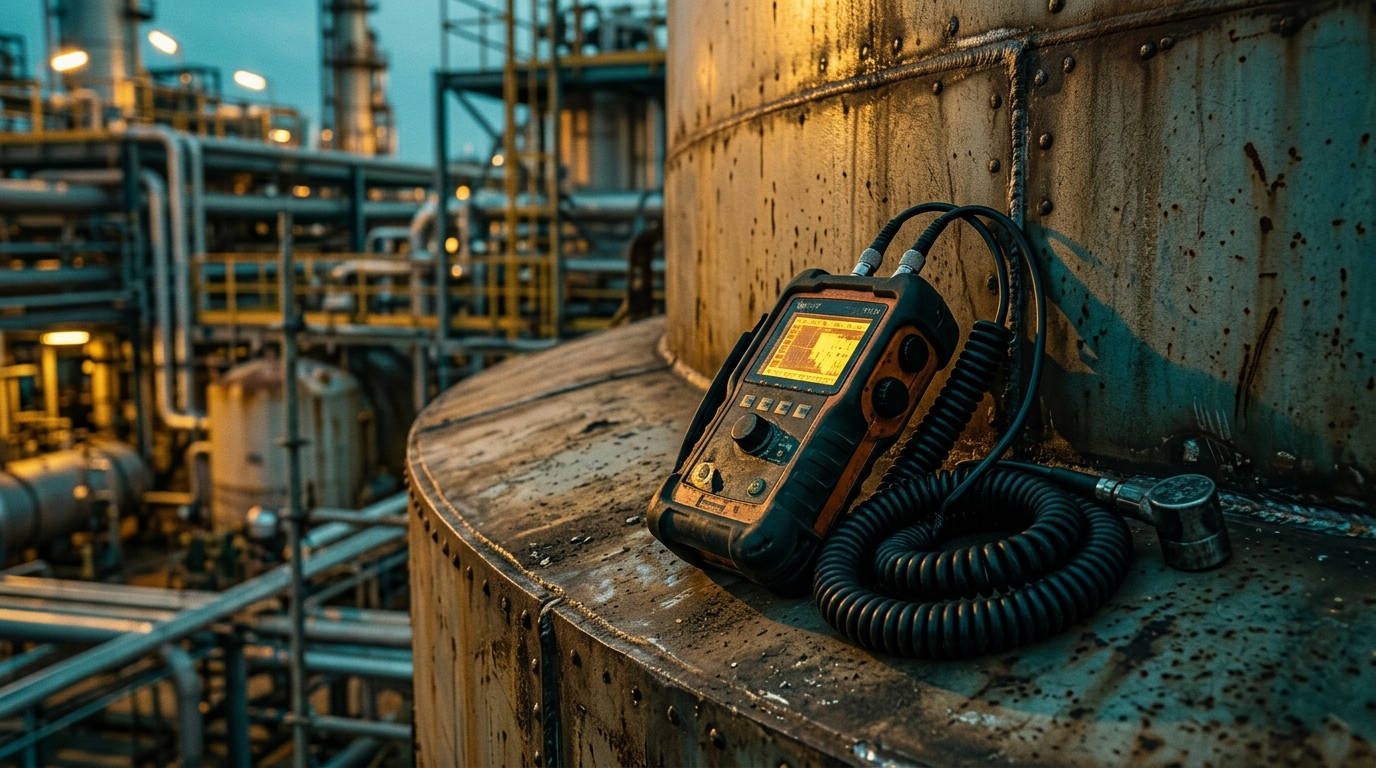
- Ultrasonic thickness monitoring at fixed CMLs (condition monitoring locations), with readings trended over time so corrosion rates are calculated from evidence, not assumed.
- Out-of-service internal inspections when API 653 intervals require them: bottom plate assessment with MFL or vacuum-box testing, internal shell inspection, roof underside evaluation.
- Piping inspection across the same logic under API 570: CML monitoring, dead-leg surveys, injection point reviews, and thickness readings that respect the actual corrosion mechanism at each location.
- Documentation that closes the loop. Reports the operator can hand to a regulator, insurer or new joint-venture partner without editing. This is the deliverable an integrity program actually produces.
Major maintenance: turning findings into fixes
Inspection without repair capability is a diagnosis with no doctor. A serious integrity partner executes what the reports call for, at the scale the reports call for. On tanks, that means bottom plate replacement, annular ring repairs, shell course courses replaced when corrosion demands, roof repairs or full replacement, and coating systems restored to specification. On piping, it means spool replacement, valve overhaul, support repair and — where the code allows — clamp repairs installed as engineered temporary measures with a defined life. All executed inside operating facilities, under the same shutdown discipline that governs the rest of the maintenance program.
Decommissioning: the scope that closes an asset's story
Not every tank comes back from an integrity assessment. When the decision is to retire an asset, decommissioning becomes the last integrity scope — and one of the most demanding, because it must be safe, environmentally clean and thoroughly documented. The sequence is deliberate: isolation and depressurization, cleaning to remove hydrocarbons and residues, gas-freeing confirmed by continuous atmospheric monitoring, mechanical disconnection, controlled demolition, and environmental closure of the footprint. It ends with waste manifests filed, the site condition documented and a report the operator can defend to any authority, at any time.
Why integrity belongs with construction capability
The clean division of labor — inspectors here, welders there — often falls apart when the report says "replace the annular ring." The operator now needs a construction crew that understands what the inspection actually described, that can execute the repair to code, and that reports back to the integrity engineer in a language that keeps the file consistent. That is why our asset integrity work sits alongside our mechanical and civil execution units under one roof: not because the disciplines are the same, but because integrity is only as useful as the construction that answers it. Thirty-five years of running both sides of that conversation is how we can commit to closing integrity findings with the same rigor with which we found them.
Integrity program: what to verify in a contractor
- Certified inspectors (API 653, API 570 or equivalent), current
- Calibrated UT equipment with traceable calibration records
- Documented CML program with historical trending, not one-off readings
- Tank cleaning and gas-freeing capability with continuous monitoring
- Welding and coating repair execution under qualified procedures
- Decommissioning experience with environmental closure records
Frequently asked questions
What standards frame integrity programs?
API 653 for above-ground storage tanks and API 570 for piping in operating facilities. Both rely on thickness monitoring, corrosion rate calculations and defined intervals.
In-service vs out-of-service inspection?
In-service covers external condition and accessible internals; out-of-service — with the tank cleaned and gas-freed — is required to assess the bottom, internal shell and roof underside, at intervals set by API 653.
What is responsible decommissioning?
Isolation, cleaning, verified gas-freeing, mechanical disconnection, controlled demolition and environmental closure of the footprint — with waste manifests and a defendable site condition report.
Do you have an integrity program in Venezuela that needs execution?
Certified inspection, code-compliant repair and safe decommissioning — under one contractor, thirty-five years running both sides of the file.