
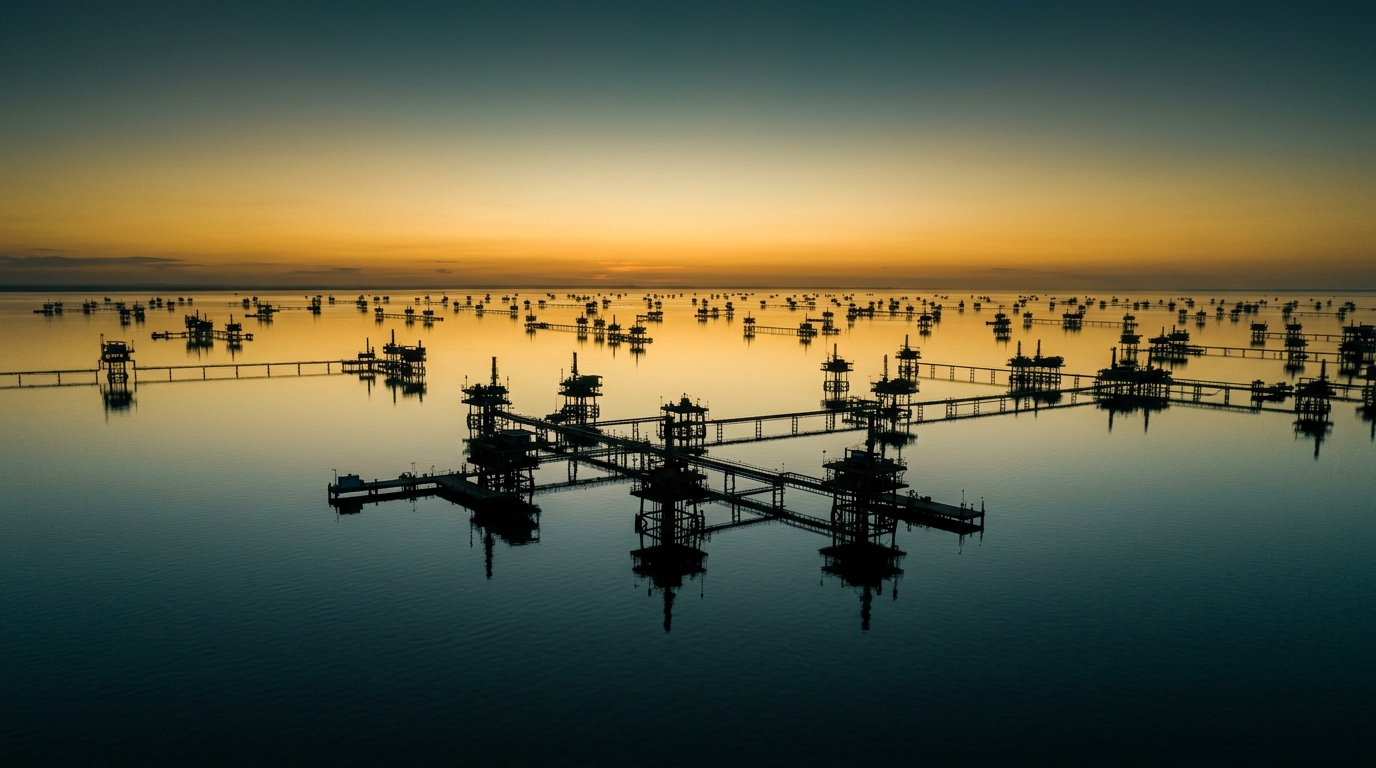
Every credential a contractor can present tells you something about competence; operational continuity is one of the few that tells you something about character. Anyone can build a company in a good year. Very few can keep one running, with the same people and the same discipline, through a bad decade. That distinction has become central to how contractors are evaluated in Venezuela today — because the country's most recent cycle removed a large share of its qualified execution capacity, and what remains is precisely the pool that stayed. This article, more reflective than technical, describes what continuity actually preserves and why it now matters so much.
The company we chose to keep
LATICON was founded in 1990 as Latino Americana de la Construcción, S.A. In the late 1990s we entered the oil industry, and since then we have executed multidisciplinary work — civil, mechanical, electrical, instrumentation, marine — for Chevron, BP, Petrobras, Maurel & Prom, PDVSA and its joint ventures. Thirty-five years is a number; the shape of those thirty-five years is the story. Three cycles of investment expansion and contraction. A decade in which the industry's local execution base contracted sharply. A recovery, now, that our clients are asking us to help lead. The company we run today is deliberately continuous with the company we ran in 1995 and 2005 and 2018 — the same commitment to the fields, the same relationships with operators, the same institutional discipline evolved forward.
What continuity actually preserves
- People. The supervisor who has run four flow-station tie-ins in the same block knows things no drawing captures. Continuity keeps that supervisor with the company — and keeps the young engineers who will replace him in fifteen years working alongside him now.
- Equipment. Machinery maintained through a downturn is machinery ready for the recovery. The alternative — buying new when demand returns — is a curve of import lead times that no schedule wants to depend on.
- Client relationships. Trust between operators and contractors is a slow deposit. The company that took a client's call in 2017, when there were few projects to bid, is the company whose call the client returns in 2026.
- Procedures that matured under pressure. HSEQ programs, permit workflows, quality documentation — the versions that survived difficult years are usually the ones that work.
- Reputation you did not have to earn twice. A market that watched you operate is a market you do not need to re-introduce yourself to.
How continuity is verified — not just claimed
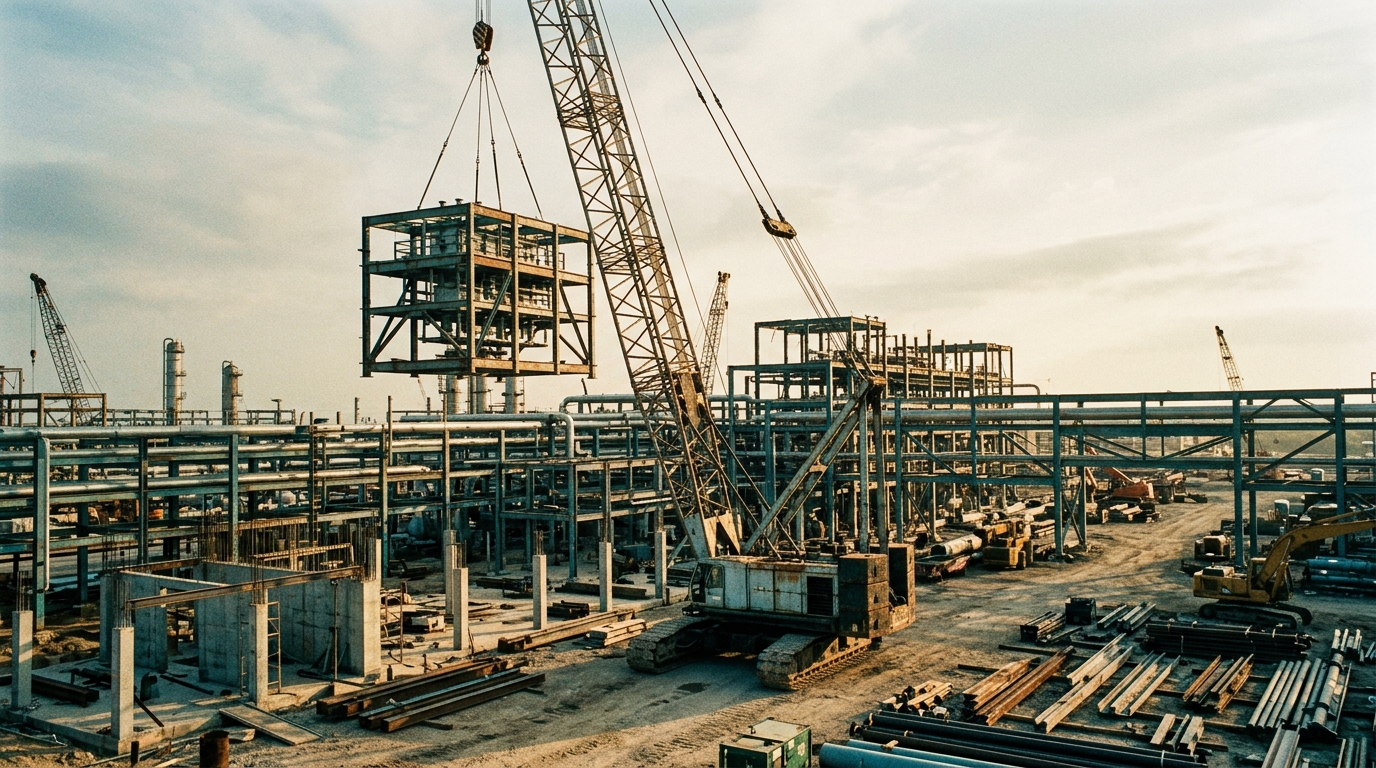
A firm can be old on paper without having been active. In a market where corporate reactivation is common and marketing is easier than execution, evaluators have learned to look past the founding date. Continuous mercantile registration and tax standing across the difficult years. Labor and social security solvencies that never lapsed. A project reference list distributed across every year of the last decade, not clustered in the pre-2014 period. The tenure of key operational personnel. Reviews and testimonials — including the Google Business reviews that describe our facilities and staff as "a serious company, a crisis survivor, very cordial staff", in a reviewer's own words. Continuity leaves a paper trail. Reactivation does not.
What we bring into this cycle
The reactivation of Venezuela's oil industry deserves partners who have watched it before. We bring four business units aligned to the current shape of demand — onshore facilities and pipelines, offshore and marine support, asset integrity and maintenance, civil infrastructure and environmental — supported by owned assets, an institutionalization program advancing toward world-class standards, and a compliance framework designed for international operator scrutiny. Above all, we bring a contractor whose crews have already worked these fields, whose supervisors already know the operators' procedures, and whose organization has proven, at length, that it can be counted on when the cycle is not easy. That is the case we make to the operators, engineering firms and joint ventures now writing the project list of the next decade.
How to read a contractor's continuity
- Corporate history under continuous registration since founding
- Uninterrupted labor, tax and social security solvencies
- Project references distributed across every recent year
- Tenure of key operational personnel
- Third-party reviews spanning multiple years
- Client relationships resumed, not created, in the recovery
Frequently asked questions
Why does operational continuity matter more in Venezuela?
The last decade removed much of the local qualified contractor base. Firms that kept operating retained crews, maintained equipment, sustained client relationships and preserved institutional memory of how these fields fail and recover — the pool of executable capacity available today.
How is continuity verified, not just claimed?
Continuous mercantile and tax registrations, uninterrupted labor solvencies, references distributed across the difficult years and the tenure of key operational personnel. Continuity leaves a paper trail; reactivation does not.
What is institutional memory in oilfield contracting?
The unwritten knowledge of supervisors, foremen and tradespeople who worked specific fields, equipment and clients repeatedly. It exists only in organizations that stayed together — and it is what turns a schedule from a bet into a plan.
Looking for a Venezuelan partner with an unbroken history?
Thirty-five years of continuous operation, four business units, owned assets and the institutional memory that only continuity produces.